
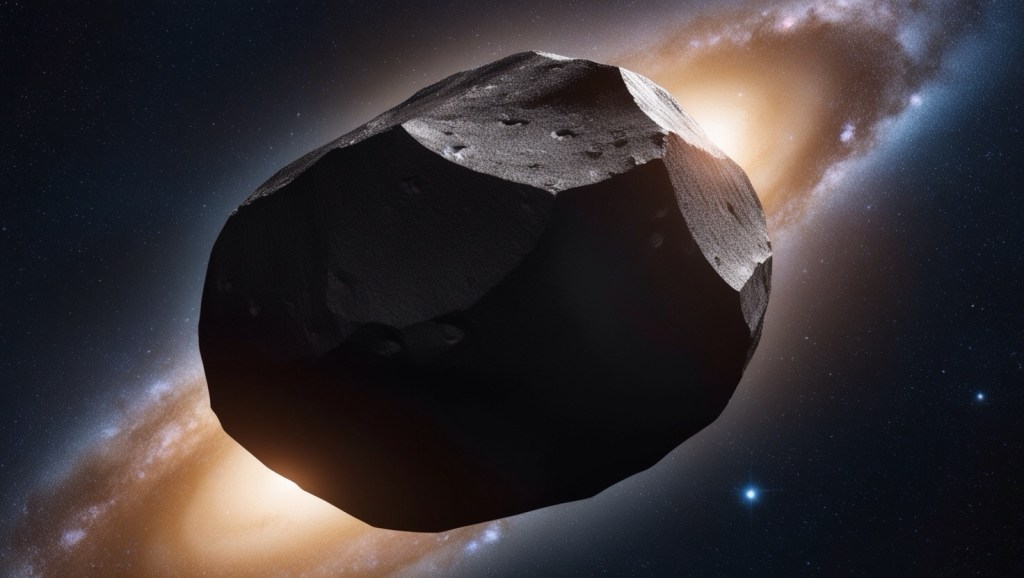
I woke up this morning with a thought that just wouldn’t leave me alone, and it was honestly a little frustrating.
It’s this simple fact: whenever we look up at the stars, we’re always looking into the past.
As a human being , I can’t be held by any kind of constraints. The thought crushed me inside.
Immediately I was torn by heartache as tears ran down my cheek, knowing the loneliness we all share, our destiny that we are born only to die, and that for all the knowledge we have of our universe, we can’t physically grasp it with the tips of our fingers.

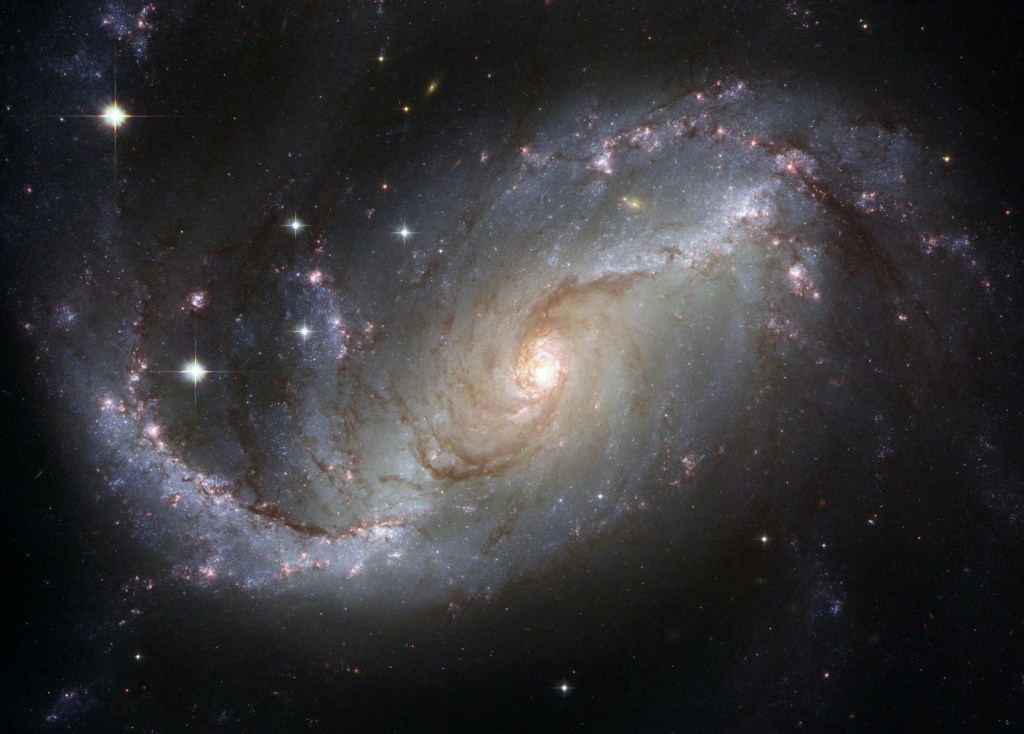
Take the Andromeda Galaxy for example.
It’s that beautiful, faint smudge you can see in the night sky. But because it’s 2.5 million light-years away, the light reaching our eyes tonight actually left that galaxy 2.5 million years ago. We aren’t seeing Andromeda as it is right now; we’re seeing a picture of it from a time when early humans were first walking the Earth. How frustrating is that? It feels like we’re disconnected, always watching a replay of a game that ended long ago.
Then you think about traveling there. Our physics today just doesn’t have a shortcut. And even if we could invent a ship that travels near the speed of light, it creates a whole new kind of heartbreak. The astronauts on that ship could reach Andromeda in their lifetime, but because of how time warps at high speeds, millions of years would have passed back here on Earth. They could see a new galaxy, but they could never come home. It would be the loneliest, most one-way trip imaginable.
For most of the day, I felt stuck on that. It seemed like the universe was this incredible place that we could never truly be a part of.
But then, later in the day, a different thought pushed through. I was thinking about it all wrong.
Wait a minute… what about Astro-archaeology?
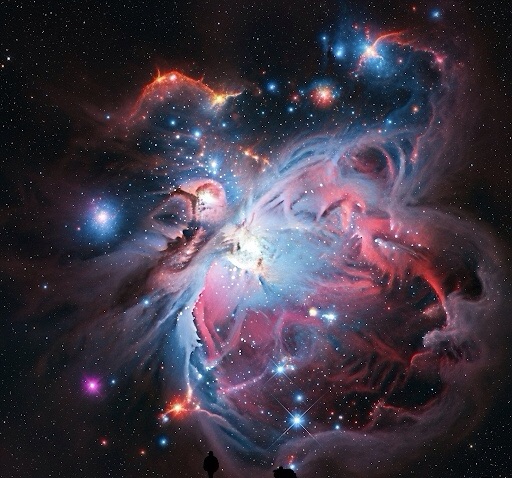
What if the goal isn’t to see the universe “live”? What if the past isn’t a frustrating barrier, but a giant, silent museum waiting to be explored? We are traveling through the galaxy, and maybe, just maybe, our path will cross with something left behind by a civilization that came before us.
Suddenly, the frustration melted away.
The past wasn’t a wall anymore; it became a destination. The idea that we could find a probe, a ruin, or some ancient echo of another intelligence is just as incredible as visiting a living world. It changes everything. We wouldn’t be travelers trying to catch up to the present; we’d be cosmic archaeologists, uncovering the secrets of what has been. And that feels like a journey with a purpose.
So then, I say :
Can you imagine… well, stop imagining for a second, because there are possible probes or mega-structures we might actually find floating out there in space. It sounds like pure science fiction, but there’s a whole field of thought called Astro-archaeology that explores this very idea.
Think about it: our own solar system isn’t just sitting still.
We’re on a wild ride around the center of our Milky Way galaxy, zipping along at about half a million miles per hour! That’s seriously fast – it’s like going from Calgary to New York in under a minute. This huge galactic lap we’re on takes us around 230 million years to complete. Over that kind of time, we travel through a lot of different cosmic neighborhoods.
Now, our universe is ancient – almost 14 billion years old. Our solar system, at 4.6 billion years old, is a relative newcomer. That means there’s been a whole lot of time for other intelligent civilizations to have popped up, maybe even built amazing things, and perhaps even faded away long before we were around.
So, what is Astro-archaeology all about?
It’s basically like being a space detective. Instead of digging in the ground for old pottery, we’d be looking out into the vastness of space for signs of past intelligent life. This could be anything:
- Derelict Probes: Imagine finding an old spacecraft, maybe millions of years old, still drifting in space. It might be broken down, but it could still hold incredible information about the technology and beings that built it.
- Mega-structures: These are hypothetical, massive structures built by advanced civilizations, like giant solar collectors around a star (Dyson Spheres) or artificial habitats. Finding one of these would be mind-blowing proof of a truly advanced society.
- Technosignatures: These are less direct signs, like unusual radio signals or strange chemical compositions in the atmospheres of distant planets that could hint at industrial activity.
- The Big Question: How Could We Find Something?
As we and our solar system cruise through the galaxy, there’s a chance we could literally stumble upon something. Think of it like sailing the ocean and finding a shipwreck. Our telescopes are getting more and more powerful, allowing us to scan wider areas of space and see fainter objects. We’re also actively listening for unusual signals. - What if We Actually Found Something?
The discovery of an alien technological object would change everything. - History Rewritten: It would prove, without a doubt, that we are not alone in the universe. Our understanding of biology, technology, and the potential for life beyond Earth would be completely revolutionized.
- New Science: Studying such an object could unlock unimaginable scientific knowledge. We might learn about physics, engineering, and materials science far beyond our current understanding.
- Philosophical Earthquake: It would force us to reconsider our place in the cosmos. Questions about our origins, our future, and our significance would take on a whole new meaning.
Of course, there would also be challenges. Who “owns” such a discovery? How do we safely study something potentially made by an intelligence we know nothing about? That being said, the possibility, however slim it might seem, is incredibly exciting. As we continue our relentless journey through the Milky Way, we are, in a very real sense, explorers of time as well as space. We might just be on a path that leads us to the echoes of ancient stars and the silent testament of civilizations that came before us. Wouldn’t that be something? My god ! I hope we see something soon…
Bari Marcus Anthony

 Dreams and Reality
Leave a comment